
Why Do Fingers Wrinkle in Water? (Explained)
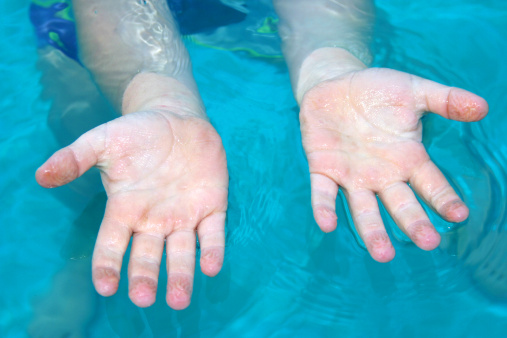
Have you ever stepped out of a long bath or swim and noticed your fingertips looking wrinkled and pruney? It happens to almost everyone, yet most people assume it is simply water soaking into the skin. The real explanation, backed by decades of scientific research, is far more interesting — and it involves your nervous system, your blood vessels, and possibly an ancient evolutionary advantage.
Table of Contents
What Actually Happens to Your Skin in Water?
The outermost layer of your skin is called the stratum corneum. It is composed of dead skin cells containing a protein called keratin, the same protein found in your hair and nails. This layer acts as a semi-permeable barrier between your body and the environment.
The skin on your palms and the soles of your feet is called glabrous skin — a term derived from the Latin word glaber, meaning “bald.” This hairless skin is thicker than skin elsewhere on your body, packed with sensory receptors, and contains a higher concentration of keratin cells. This is precisely why wrinkling occurs on fingers and toes but not on your back or arms.
On the surface of your skin sits a thin layer of sebum, a natural oil that acts as a waterproof barrier. When you wash your hands briefly, water runs off because of this oil layer. However, prolonged exposure to water gradually washes away the sebum, allowing water to penetrate into the stratum corneum.
The Real Cause: Vasoconstriction, Not Water Absorption
For a long time, the popular assumption was that finger wrinkling was caused by the skin absorbing water and swelling up like a sponge. Researchers have known since the 1930s that this explanation does not hold up — in people with nerve damage in their fingers, the post-bath wrinkles simply do not form. Popular Science If wrinkling were purely a passive result of water absorption, it would happen regardless of nerve function.
When your hands and feet come into contact with water for more than a few minutes, the sweat ducts in your skin open, allowing water to flow into the skin tissue. This added water decreases the proportion of salt inside the skin. Nerve fibers send a message about lower salt levels to your brain, and the autonomic nervous system responds by constricting the blood vessels.
When tiny blood vessels inside the skin contract, they pull the skin’s surface down, forming the wrinkles you see after a long bath. The narrowing of the blood vessels causes the overall volume of skin to reduce, puckering the skin into these distinct wrinkle patterns — much like how a dried-out grape becomes a wrinkled raisin.
This process is called digital vasoconstriction, and it is controlled by the sympathetic nervous system — the same system that regulates your heart rate, breathing, and pupil dilation.
The Role of the Sympathetic Nervous System
In a 1936 paper, Sir George White Pickering and Thomas Lewis reported case studies of people with polio-induced nerve damage who had wrinkle-proof digits — regardless of how long they spent in water, their fingers remained smooth. These patients had sustained damage to their median nerve, which runs down the arm and provides motor and sensory links to the hand and forearm.
Research in the 1970s identified that it was damage to the sympathetic connections in the median nerve that stopped wrinkling. Dipping a hand in warm water was subsequently recognized as a valuable clinical test for this type of nerve damage.
It was not until 2003 that a study identified exactly how the sympathetic nervous system caused fingers to wrinkle. Researchers found that finger wrinkling was accompanied by a sudden drop in blood flow, caused by the sympathetic nervous system narrowing the diameter of the blood vessels in the hand — a process called vasoconstriction.
Do Wrinkle Patterns Stay the Same Each Time?
Research from Binghamton University by Associate Professor Guy German confirmed that because finger wrinkles after prolonged immersion are caused by blood vessels beneath the skin contracting, the patterns of wrinkles stay consistent. Blood vessels do not change their position significantly, which means the wrinkles should form in the same manner every time — and research proved that they do.
The study placed subjects’ fingers in water for 30 minutes, photographed the results, and repeated the process at least 24 hours later. The same patterns of raised loops and ridges appeared after both immersions.
Why Does It Only Happen on Fingers and Toes?
The hands and feet have the thickest layer of dead keratin cells in the body, because these areas are subjected to the most wear and tear. There are more keratin cells in the epidermis of the hands and feet than anywhere else, which means the wrinkling response is far more pronounced there. Although nails and hair are also made of keratin, they absorb little water during bathing and do not shrink in volume — they simply get softer.
What Is the Evolutionary Purpose of Wrinkled Fingers?
Scientists have proposed that finger wrinkling is not just a side effect of water exposure — it may actually serve a useful purpose. In 2011, Mark Changizi, an evolutionary neurobiologist at 2AI Labs, suggested that since wrinkling is an active process driven by the nervous system, it must have an evolutionary function.
This was later confirmed experimentally. Research found that with wrinkled fingers, transfer of submerged objects happened 12 per cent faster than with unwrinkled fingers. There was no difference in the time it took to transfer dry objects with or without wrinkles, showing a clear advantage of having wrinkled fingers specifically when manipulating submerged or wet objects.
The wrinkles are thought to work like rain treads on car tires, channeling water away from the contact surface of the fingertip and allowing for a better grip on wet or submerged objects.
The same effect in the toes may help with grip and stability when walking on wet surfaces.
Wrinkled fingers could have helped our ancestors to gather food from wet vegetation or streams, and the analogous effect in the toes could help with footing in the rain.
How Long Does It Take for Fingers to Wrinkle?
It takes approximately three and a half minutes of soaking for a hand to become wrinkly. Once out of the water, the blood vessels return to their normal diameter and the wrinkles disappear within 10 to 20 minutes as the skin’s volume is restored.
Can Finger Wrinkling Reveal Health Problems?
Because the wrinkling response depends entirely on the sympathetic nervous system functioning correctly, abnormal wrinkling patterns can indicate underlying health conditions. People with type 2 diabetes, cystic fibrosis, nerve injuries, or early-stage Parkinson’s disease show delayed, excessive, or asymmetrical wrinkling. Researchers are exploring the use of finger wrinkling as a cheap, noninvasive way to screen for nervous system or cardiovascular issues.
Additionally, the consistent patterns of water-induced wrinkles could have real-world applications in forensics, such as fingerprinting at crime scenes and identifying bodies found after prolonged water exposure.
Frequently Asked Questions
Does osmosis cause finger wrinkling? Osmosis plays a partial role. When water enters the skin through sweat ducts, it dilutes the salt concentration in skin tissue, triggering a nerve signal. However, the wrinkling itself is caused by vasoconstriction — the contraction of blood vessels — not by the skin swelling from water absorption.
Why do fingers wrinkle in water but not the rest of the body? The fingers, palms, toes, and soles of the feet have the thickest concentration of keratin cells and the densest network of blood vessels and sensory nerves close to the surface, making the vasoconstriction effect most visible there.
Is finger wrinkling in water harmful? No. It is a normal, temporary autonomic response. The wrinkles disappear shortly after leaving the water and cause no damage to the skin under normal circumstances.