
Top 4 Benefits Of Using Retinoid Cream
Medical Disclaimer: This article is for informational purposes only and does not constitute medical or dermatological advice. Retinoids — especially prescription-strength tretinoin — should be used under the guidance of a qualified healthcare provider. Always consult a dermatologist before starting any new skincare treatment.
If there is one skincare ingredient that dermatologists consistently agree on, it is retinoids. Backed by decades of clinical research, retinoid creams are among the most studied and proven topical treatments in dermatology — not just another trend.
But the word “retinoid” gets used as a catch-all that can mean very different things. A prescription tretinoin cream and an over-the-counter retinol serum are both retinoids — but they work at different strengths, speeds, and with different side effect profiles.
This guide explains the top four science-backed benefits of retinoid creams, how they actually work at a skin level, what to realistically expect, and what you need to know before starting — all in plain English.
Table of Contents
What Are Retinoids? A Quick Primer
Retinoids are a class of compounds derived from Vitamin A. They work by binding to retinoic acid receptors in skin cells, triggering accelerated cell turnover, increased collagen production, and regulated skin cell differentiation. The retinoid family includes several forms with varying potency:
- Retinyl esters (retinyl palmitate): Mildest OTC form — must convert through multiple steps; slowest acting.
- Retinol: Most common OTC retinoid. Converts to retinoic acid in two steps. Effective but slower than prescription.
- Retinaldehyde (retinal): One step from retinoic acid. Stronger than retinol, faster visible results, still OTC in many markets.
- Adapalene (Differin): Third-generation synthetic retinoid, OTC in many countries. Highly effective for acne with excellent tolerability.
- Tretinoin (retinoic acid): Prescription-only in most countries. The gold standard — binds directly to receptors without conversion.
- Tazarotene and trifarotene: Prescription-strength synthetics. Among the most potent available for acne, psoriasis, and photoaging.
The benefits below apply to the retinoid class as a whole — though how quickly and dramatically you experience them depends on which form you use and at what concentration. For those who want to explore the underlying science, PubMed’s indexed research on topical retinoids covers decades of peer-reviewed clinical studies on this ingredient class.
Benefit 1: Visibly Reduces Signs of Aging and Photoaging
This is the most researched benefit of retinoids — and the evidence is genuinely robust. Retinoids are one of the very few skincare ingredients with clinical trial data demonstrating measurable improvements in wrinkles, skin texture, and elasticity.
How Retinoids Target Aging Skin
As skin ages and accumulates UV damage (photoaging), collagen production slows, existing collagen breaks down faster, and cell turnover slows. Retinoids address all of these simultaneously:
- Stimulate collagen synthesis: Retinoids activate fibroblast activity, directly increasing the production of type I and type III collagen — the proteins responsible for firmness and elasticity.
- Inhibit collagen-degrading enzymes: Retinoids suppress matrix metalloproteinases (MMPs) activated by UV radiation that break down collagen, slowing the degradation side of the equation.
- Accelerate epidermal cell turnover: By speeding up cell renewal, retinoids shed the damaged surface layer and bring newer, healthier cells forward — improving texture and tone.
- Reduce hyperpigmentation: Retinoids inhibit melanin transfer to surface skin cells, fading dark spots and evening out uneven pigmentation over time.
- Improve skin thickness: Long-term use has been shown to increase dermal thickness — reversing some of the skin thinning associated with aging and sun damage.
What the Research Shows
Landmark studies cited by the American Academy of Dermatology have demonstrated that topical tretinoin produces statistically significant improvements in fine lines, coarse wrinkles, and mottled pigmentation. Some studies show measurable changes in as little as 12 weeks, with continued improvement at 6 and 12 months of consistent use.
What to Realistically Expect
Most users begin to notice texture improvements at 6–8 weeks, with more significant wrinkle and pigmentation changes at 3–6 months. Prescription tretinoin works faster than OTC retinol, but also carries a higher risk of the initial irritation phase known as retinoid dermatitis.
Benefit 2: Clinically Proven Treatment for Acne
Retinoids have been a cornerstone of acne treatment for over 40 years. They are recommended in clinical guidelines for both mild-to-moderate and more severe acne — not as an alternative to other treatments, but often as the foundation of any topical acne regimen.
How Retinoids Fight Acne
- Prevent comedone formation: Retinoids normalize abnormal keratinization inside hair follicles — the root cause of comedones (blackheads and whiteheads). They address acne at its source rather than just treating existing breakouts.
- The retinoid cream assists in unclogging pores and prevents them from getting clogged again. This cycle assists with limiting existing imperfections and forestall new breakouts.
- Anti-inflammatory effects: Beyond their comedolytic action, retinoids reduce the inflammatory signaling pathways involved in inflammatory acne including papules, pustules, and nodules.
- Enhance penetration of other actives: Retinoids improve absorption of other topical treatments including benzoyl peroxide and antibiotics — which is why combination therapy including a retinoid is standard dermatological practice.
- Reduce post-acne hyperpigmentation: By accelerating cell turnover, retinoids help fade the dark marks (post-inflammatory hyperpigmentation) that linger after active breakouts resolve.
OTC Adapalene: Accessible Acne Treatment

The approval of adapalene 0.1% for over-the-counter sale in markets including the US, UK, and Australia has made effective retinoid acne treatment accessible without a prescription. Clinical studies demonstrate adapalene’s efficacy is comparable to tretinoin for acne — with better tolerability. For many acne sufferers it is an excellent first retinoid.
Benefit 3: Improves Skin Texture and Pore Appearance
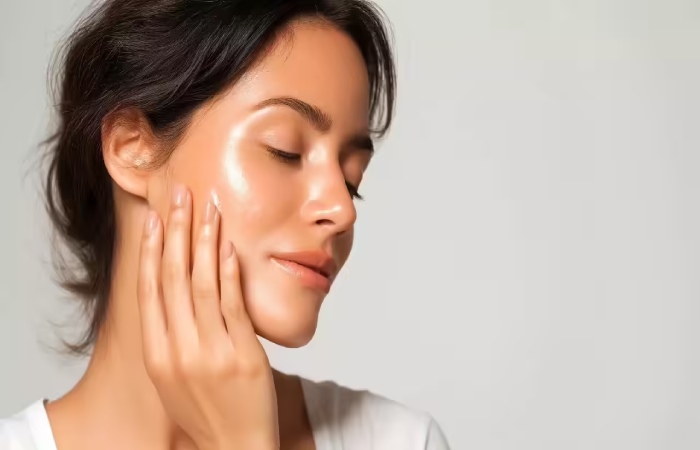
Beyond anti-aging and acne, one of the most consistently reported improvements from retinoid users is a dramatic change in overall skin texture — the smoothness, evenness, and quality of the skin’s surface.
The Texture Transformation
Retinoids accelerate the natural desquamation (shedding) process. Healthy skin sheds surface cells every 28–40 days — a cycle that slows with age and becomes irregular with sun damage and acne. Retinoids speed and normalize this cycle, producing:
- Smoother skin surface as rough, irregular cell buildup is shed more regularly
- Reduced appearance of enlarged pores — kept clearer by improved cell turnover and reduced congestion
- More even skin tone as older, uneven surface cells are replaced by newer, more uniform ones
- A natural glow effect as light reflects more uniformly off a smoother surface
Why This Matters Beyond Aesthetics
Improved skin texture also means better function. Skin with normalized cell turnover maintains its barrier more effectively — retaining moisture better, responding more resiliently to environmental stressors, and absorbing other skincare products more uniformly.
Benefit 4: Addresses Hyperpigmentation and Uneven Skin Tone
Hyperpigmentation — from sun damage, post-acne marks, melasma, or age spots — is one of the most common skincare concerns globally. Retinoids tackle it through multiple mechanisms, making them one of the most effective topical options available.
How Retinoids Fade Pigmentation
- Inhibit tyrosinase activity: Tyrosinase is the key enzyme in melanin production. Retinoids inhibit this enzyme, reducing overall melanin production at the source.
- Disrupt melanin transfer: Retinoids interfere with melanin transfer from melanocytes to surface skin cells, reducing how much pigment actually reaches the skin’s surface.
- Accelerate pigmented cell shedding: By speeding up cell turnover, retinoids shed already-pigmented cells faster — revealing less-pigmented newer cells beneath.
- Synergize with other treatments: Retinoids are commonly combined with vitamin C, niacinamide, azelaic acid, and hydroquinone because they enhance the efficacy of these actives by improving penetration.
Important Note on Melasma
Melasma is a particularly stubborn form of hyperpigmentation common in women with darker skin tones and often triggered by hormones or sun exposure. It responds to retinoids, but overuse or irritation can trigger post-inflammatory hyperpigmentation that worsens appearance. Dermatologist guidance is especially important for melasma treatment.
How to Use Retinoid Cream: Getting Started the Right Way
The benefits of retinoids are well-established — but so is the potential for irritation if you start incorrectly. Here is how to introduce a retinoid into your routine to maximize benefits and minimize the adjustment period.
The Start Low, Go Slow Approach
- Start with a low concentration: Begin with 0.025% tretinoin or standard OTC retinol (0.1%–0.3%). Starting too strong causes unnecessary irritation without additional benefit.
- Apply at night only: Retinoids are photosensitive and degraded by UV light. Nighttime application is standard. Always apply SPF the following morning — this is non-negotiable.
- Start 2–3 nights per week: Allow skin recovery time between applications. Gradually increase frequency over 4–8 weeks as tolerance builds.
- Apply to completely dry skin: Wait 20–30 minutes after cleansing. Applying to damp skin increases penetration and irritation.
- Use a pea-sized amount for the entire face: More is not more with retinoids. Excess application increases irritation without increasing efficacy.
- Moisturize after or use the sandwich method: Apply gentle moisturizer over your retinoid — or between two moisturizer layers — to reduce irritation while maintaining efficacy.
The Retinoid Purge: What It Is and Why It Happens
Many new retinoid users experience an initial purge — a temporary worsening of acne or skin texture in the first 4–6 weeks. Accelerated cell turnover brings congestion forming beneath the surface up faster than it would otherwise emerge. This is normal, not a sign the product is wrong for you. If significant irritation or severe breakouts persist beyond this window, consult a dermatologist.
Who Should Avoid Retinoids
- Pregnant or breastfeeding women — retinoids are contraindicated in pregnancy due to teratogenic risk
- People with eczema or rosacea — retinoids can exacerbate these conditions; proceed only with dermatologist guidance
- Anyone with extremely sensitive or compromised skin barrier — introduce retinoids only after the barrier is restored
- Those using certain medications that increase photosensitivity — check with your prescriber
Frequently Asked Questions (FAQ)
The most common questions about retinoid cream benefits and use.
What is the difference between retinol and retinoid?
Retinoid is the umbrella term for all Vitamin A derivatives used in skincare. Retinol is one specific type — an over-the-counter form that converts to retinoic acid in two steps. Prescription tretinoin is retinoic acid in its already-active form, making it significantly stronger and faster-acting than retinol, with higher potential for irritation. Both are retinoids; retinol is simply the OTC member of the family.
How long does it take for retinoid cream to work?
Most users notice improved texture and early glow effects at 6–8 weeks. Measurable improvements in wrinkles, hyperpigmentation, and acne typically appear at 3–6 months. Full results — including dermal remodeling and collagen changes — continue improving over 12+ months. Patience and consistency are essential; stopping too early is the most common reason people do not see results.
Can I use retinoid cream every day?
Eventually, yes — but not immediately. Most dermatologists recommend starting 2–3 nights per week and building to nightly use over 6–12 weeks as tolerance develops. Some people with sensitive skin find 3–4 nights per week to be their long-term sweet spot, which is perfectly effective. Consistency over time matters more than daily frequency.
Should I use retinoid cream in the morning or at night?
Nighttime only. Retinoids are photosensitive — UV light degrades them and reduces efficacy. More importantly, retinoids thin the stratum corneum, increasing your skin’s UV vulnerability. Apply at night, and always follow with broad-spectrum SPF 30+ the next morning. Using a retinoid without daily sun protection undermines both its benefits and your skin’s health.
Is retinoid cream safe for dark skin tones?
Yes — retinoids are safe and effective for all skin tones. However, people with deeper complexions need extra care around irritation, as inflammation in melanin-rich skin can trigger post-inflammatory hyperpigmentation (PIH). Starting low, going slow, and carefully managing the initial adjustment period is especially important. Adapalene is often recommended as a first retinoid for darker skin tones due to its superior tolerability.
Can I use retinoid cream with vitamin C or niacinamide?
Yes to both. Vitamin C is typically used in the morning while retinoid is used at night, maintaining both actives’ stability. Niacinamide is an excellent companion to retinoids — it strengthens the skin barrier and reduces the redness and irritation retinoids can cause. Using niacinamide alongside your retinoid is a well-supported strategy for improving tolerability.
Final Thoughts: The Most Evidence-Backed Ingredient in Skincare
Retinoids do not have the flashy marketing of many skincare trends. They have been around for decades. They require patience. They come with an adjustment period that is occasionally uncomfortable.
But they also have something very few skincare ingredients can claim: a body of clinical evidence that is deep, consistent, and peer-reviewed. For anti-aging, acne, texture, and pigmentation — four of the most common skincare concerns in the world — retinoids deliver on their promise when used correctly and consistently.
Start slow. Protect your skin from the sun. Be patient. And if you are considering prescription-strength retinoids, speak to a dermatologist who can match the right formulation to your specific skin goals.
Looking for more skincare, beauty, and lifestyle insights? Visit FindCult at findcult.com for well-researched guides on the products and ingredients that actually work.