
How In-Home Care Helps Older Adults Stay Safe and Independent
What Is OkayPeriod. com? A Real Look at This Menstrual Wellness Platform (USA)
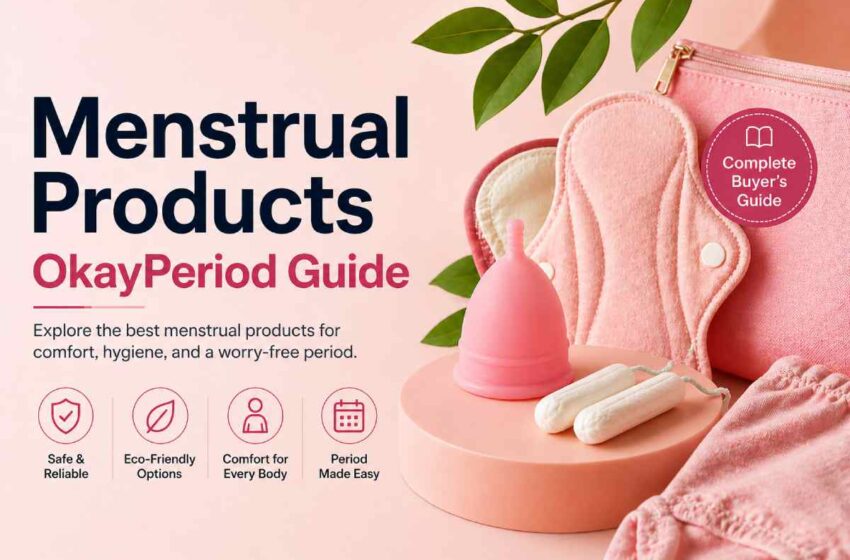
You searched for okayperiod. com. So let’s not waste your time.
You’re probably here because something’s going on — a symptom you can’t quite place, a product you’re thinking of switching to, or just the general sense that you never got a real explanation of how your cycle works and maybe it’s time to fix that.
All of that is reasonable. All of that is exactly what OkayPeriod. com is for.
It’s a menstrual wellness platform that covers period basics, cycle tracking, product comparisons, and symptom education — without the clinical detachment of a medical journal or the vagueness of advice that amounts to “drink more water.”
This guide tells you what’s actually on the site, who benefits most from it, and where its limits are. Because any health resource that doesn’t tell you its limits probably shouldn’t be trusted.
Table of Contents
Summary
- Okayperiod . com is a menstrual wellness website built around practical, stigma-free education.
- It covers period basics, cycle tracking, product comparisons, PMS, and more — written for everyday readers.
- Useful whether you’re dealing with your first period or have been menstruating for twenty years.
- Isn‘t a substitute for a doctor but it provides you with the terminology and understanding so you‘ll know when you really need one.
- Next step: browse Okayperiod . com, or check FindCult’s related menstrual health guides for deeper dives.
So What Does Okayperiod . com Actually Cover?
The site seems to be broken into three broad buckets: Menstrual Care, Cycle Support and Essential Needs. Here‘s the breakdown of those categories.
| Pillar | What You’ll Actually Find | Who Gets the Most Out of It |
| Menstrual Care | Tips for managing cramps, flow, hygiene, and discomfort — the practical day-to-day stuff | Anyone who wants clear answers without wading through a medical journal |
| Cycle Support | How hormones shift across your cycle, what that means for energy and mood, how to track it | People who want to understand their body beyond just “when will it start” |
| Essential Needs | Product comparisons — pads, tampons, cups, period underwear — and what suits different lifestyles | Anyone switching products for the first time, or overwhelmed by options |
The writing style is casual — not overly clinical — which works well for people who shut down the moment a website starts sounding like a textbook.
Who Should Spend Time on This Site (and Who Probably Won’t Get Much Out of It)
Okayperiod . com isn’t for everyone equally. Here’s a realistic breakdown.
This site is a good fit if you’re:
- Getting your first period and want straightforward information without awkwardness
- Switching period products and genuinely unsure what the difference is between a menstrual cup and a tampon
- Trying to understand why your mood tanks at the same point every month
- A parent or caregiver looking for reliable content to share with a younger person
- Someone who never got great period education growing up — which, statistically, is most people
It’s probably not enough if you’re dealing with:
- Symptoms are severe, worsening or interfering with your daily life
- Suspected conditions like endometriosis, PCOS, or fibroids
- Heavy bleeding that soaks through protection every hour for several hours
- Suddenly ceased No clear explanation for their cessation.
For those situations, you need a gynecologist or primary care provider — not a blog. A good menstrual health website should help you recognize warning signs, not replace clinical care.
The Bigger Problem Okayperiod . com Is Trying to Solve
Here’s something that doesn’t get talked about enough: menstrual health education in the U.S. is genuinely patchy.
A policy review on 2025 in Frontiers in Reproductive Health revealed that as of August 2024, only 32 states had enacted school policy on menstrual health in K-12 schools, and even then, only about 34% of students who menstruate were covered. That‘s a lot of people experiencing something every month with no context for it.
The statistics from PERIOD.org’s 2025 survey tell a similar story:
- 78% of teens say menstrual health should be taught as a core subject — same as math or science
- 92% agree that periods should be seen as a health indicator, not something gross or shameful
- 39% say they can’t do their best schoolwork because of limited access to period products
Even the American College of Obstetricians and Gynecologists has bowed to consensus, officially advising clinicians to consider menstruation an additional vital sign for adolescents. The NIH also supports this framing, since around 12% of all menstruating people experience the clinically significant problems known as PMS or PMDD conditions which are real, diagnosable, and treatable, but regularly dismissed as “just bad periods.”
All of this creates a context where platforms that normalize the conversation actually serve a real function. Okayperiod . com fills part of that gap.
A Closer Look at the Key Topics
Understanding Your Cycle (Not Just Your Period)
A lot of people think of their cycle as the few days they bleed. In reality it‘s 21–35 days for the majority, segmented into 4 phases (Menstruation, follicular, ovulation and luteal) where the fluctuating hormones have varying effects on energy, mood, skin, sleep and concentration.
Okayperiod . com explains this in a way that’s useful for everyday life — not just for people trying to conceive. Knowing that you tend to feel sharper mid-cycle and more fatigued in the days before your period isn’t just interesting trivia. It can actually help you plan better.
Managing the Symptoms That Actually Bother People
Cramps, bloating, mood swings, fatigue, food cravings — these are what people are actually searching for, not the clinical names for them. The site addresses all of these, with guidance on:
- Heat therapy for cramping (genuinely useful, backed by evidence)
- The role of hydration — dehydration can make cramps noticeably worse
- How the luteal phase drives cravings and mood shifts
- When “normal” PMS crosses into PMDD territory — and why that distinction matters
That last point is worth emphasizing. PMDD is more than just bad PMS. It is a diagnosable clinical mood disorder related to hormone variation, and it is treatable. Many suffer with it for years thinking they are just “emotional.”
Picking the Right Period Product
This is probably the most practically useful section for most readers. The options have genuinely expanded in the last decade — and the marketing around them is confusing.
| Product | Best For | Lasts | Reusable? |
| Disposable pads | Beginners, overnight use, postpartum | 3–8 hours | No |
| Tampons | Active days, swimming, sports | 4–8 hours | No |
| Menstrual cup | Heavy flow, sustainability-focused users | Up to 12 hours | Yes (up to 10 yrs) |
| Period underwear | Light-to-medium days, backup protection | Full day (varies) | Yes |
There really isn‘t any “best” product, the type suitable for you is dependent on your flow, activity levels, comfort levels and financial circumstances. On average a menstruating person will use almost 17,000 pads or tampons over the course of their lifetime – which is something to consider both economically and environmentally.
Cycle Tracking — More Useful Than It Sounds
Tracking your cycle is beneficial for various reasons: detecting cycle irregularities early, fostering greater awareness of your body, and enriching the quality of your conversations with your doctor about your health concerns. Detailed cycle logs provide valuable clinical data and can aid in a more informed medical consultation.
Okayperiod . com covers both app-based tracking and paper methods — a small but thoughtful inclusion, given that not everyone has a smartphone or wants another app collecting their health data.
Things People Get Wrong About Periods
Misinformation about menstrual health is surprisingly durable. Here are some of the most common myths that still circulate.
| The Myth | What’s Actually True |
| “A normal cycle is exactly 28 days” | Normal ranges from 21 to 35 days and varies between individuals — and even month to month for the same person |
| “Severe cramps are just something you deal with” | Pain that regularly disrupts your life may indicate endometriosis or another condition. That’s worth investigating, not dismissing |
| “You can’t get pregnant during your period” | Unlikely, but possible — especially for people with shorter cycles. Ovulation timing varies |
| “Menstrual cups are dangerous or hard to use” | Medical-grade silicone cups are safe for most people. There’s a learning curve, but most users adapt within a couple of cycles |
| “Light periods mean something’s wrong” | Flow varies naturally. Sudden changes in pattern are worth noting, but light periods alone aren’t automatically a problem |
Period Poverty Is Real — And Still Under-Discussed
One thing Okayperiod . com implicitly addresses just by existing: the idea that period information should be freely available to everyone.
Period poverty being unable to afford or access period products is common in the U. S. Among other findings, over a third of low-wage women have said they have missed work or school due to lack of access to period supplies. In one U. S. study, 64% of women reported that they had been unable to afford period products at some point during the past year.
Free, available education doesn‘t fix the affordability problem by itself. But it takes away one of its barriers: ignorance, or not being able to ask comfortably.
Frequently Asked Questions
What is Okayperiod . com, exactly?
It‘s the online menstrual health resource that everyone needs. It‘s got articles with basic, user-friendly info on everything that‘s got something to do with menstruation not anything for medical professionals.
Is Okayperiod . com free?
The educational content is publicly accessible. Check the site directly for current details on any products or services they offer.
Can I use it to figure out if my symptoms are serious?
It can help you to keep in mind what normal is and what‘s abnormal but not otherwise. If something doesn‘t feel right, visit a doctor, nurse, etc. Think of it as helpful background rather than diagnostic.
What’s the difference between PMS and PMDD?
PMS is the physical and emotional symptoms we experience prior to our period that are not pleasurable, but are bearable. Whereas PMDD is more dramatic in fact, it can impair your mood, your life, and your relationships. If you suspect you have PMDD, talk to your doctor about a diagnosis and treatment options.
What period product is best for a heavy flow?
For very heavy days a larger menstrual cup, overnight pad, or pair of period underwear is generally the most comfortable. If you are regularly soaking your protection every hour all day, consider consulting with a doctor to see if you have menorrhagia ( or excessively heavy menstrual flow).
Does cycle tracking actually help?
Yes, more than most people imagine. Just keeping track of what happened (start date, duration, symptoms) can help you notice patterns, and is a really valuable set of data to have ready to show a doctor if you need to. It doesn‘t have to be complicated to be helpful.
Bottom Line
If you’ve spent any time on Okayperiod . com — or you’re trying to figure out whether it’s worth your time — the answer is: probably yes, depending on what you need.
It’s not a medical resource. It’s not going to replace a conversation with your gynecologist. But as a starting point for understanding your cycle, navigating product options, or just getting honest information about something that affects you every single month — it does the job well.
Menstruation remains under discussed in schools, in the workplace, and in mainstream health circles. The ACOG aims for clinicians to regard menstruation as a vital sign. A third of low-wage women have missed work because of period product access issues. 59% of teenagers feel stigmatized by the very thing happening in their own bodies.
Okayperiod . com is one small piece of a larger effort to normalize the conversation. If you’re ready to go deeper — on cycle tracking, product comparisons, or specific symptoms — FindCult’s menstrual health section has you covered.