
How In-Home Care Helps Older Adults Stay Safe and Independent
How To Preserve a Horse’s Teeth?
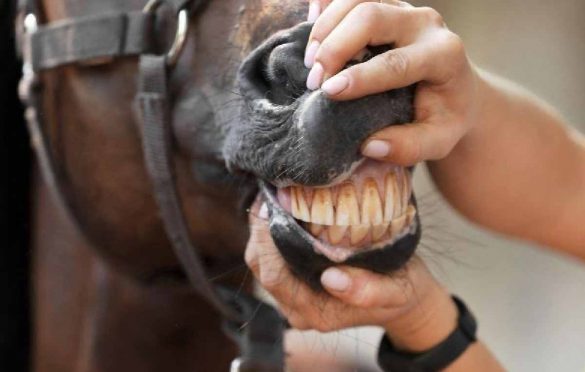
A horse’s teeth are not just for chewing hay. They are a window into the animal’s overall health, a factor in its ability to perform, and — when problems develop — a source of significant pain that horses are often very good at hiding.
Equine dental problems are among the most common health issues affecting horses worldwide, yet they remain one of the most underappreciated areas of horse care. Many owners focus on hoof care, vaccination schedules, and parasite control — and overlook the teeth until a problem becomes impossible to ignore.
This guide covers everything you need to know about preserving your horse’s teeth: how equine dentition works, why horses need regular professional dental care, what you can do as an owner to support dental health between visits, the warning signs of dental problems, and how to choose the right equine dental professional.
Why Horse Dental Care Is Non-Negotiable: Horses are hypsodont — their teeth erupt continuously throughout life, wearing down at roughly 2–3mm per year. Unlike humans, horses cannot develop new adult teeth to replace worn ones. Dental problems left untreated can lead to weight loss, colic, behavioral issues under saddle, and significant pain. Regular professional dental care is the single most important thing you can do to preserve your horse’s teeth long-term.
Table of Contents
Understanding Equine Dentition: How a Horse’s Teeth Work
Horses have a dental system that is fundamentally different from humans — and understanding those differences is the foundation of good equine dental care.
The Basic Anatomy of Horse Teeth
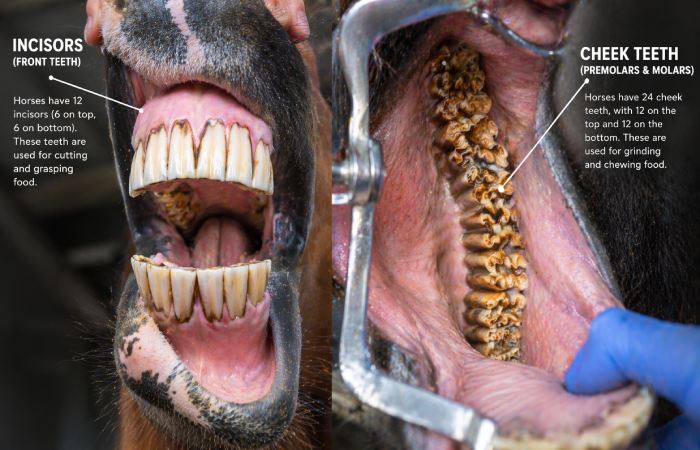
A mature male horse typically has 40–42 teeth; a mature mare typically has 36–40. The main categories of equine teeth are:
- Incisors (12 total): The front teeth used for grasping and cutting grass and hay. They are the teeth most visible when a horse opens its mouth and are used by veterinarians to estimate a horse’s age through characteristic wear patterns.
- Canines (0–4): Also called tushes — usually present in male horses, rarely in mares. Located in the space (diastema) between incisors and cheek teeth. They serve no chewing function and can sometimes develop sharp edges.
- Wolf teeth (0–4): Small vestigial premolars that emerge in front of the first cheek teeth. They are present in approximately 70% of horses and are routinely removed in horses being bitted, as they can cause pain and resistance.
- Cheek teeth (24): The premolars and molars responsible for the grinding of forage. These are the workhorses of the equine dental system — they process the enormous volumes of fibrous plant material a horse consumes daily.
The Hypsodont System: Continuous Eruption
Unlike human teeth — which are relatively short-crowned and do not erupt beyond their initial emergence — horse teeth are hypsodont: they have tall, high-crowned structures that erupt continuously from the jaw throughout the horse’s life, compensating for the constant grinding wear that forage consumption causes.
A horse is essentially born with a finite reserve of tooth material embedded in its jaw. As teeth wear down, that reserve erupts to replace the surface. This is why a horse’s age can be estimated by how much tooth remains — an older horse has shorter teeth because more of the reserve has been used. It is also why preserving dental health matters so urgently: a horse cannot grow new teeth, and excessive or uneven wear permanently reduces the functional lifespan of the dental system.
The Natural Chewing Motion and Why Problems Develop
Horses chew in a lateral (side-to-side) grinding motion that ideally wears the upper and lower cheek teeth evenly. However, the upper jaw is naturally wider than the lower jaw — meaning the outer edges of the upper cheek teeth and the inner edges of the lower cheek teeth do not make full contact. Over time, these non-contact edges develop sharp points that can lacerate the cheeks and tongue, interfere with the chewing motion, and cause significant pain.
This is the primary reason why horse teeth require professional floating (filing) on a regular schedule — to remove these sharp points and maintain a functional chewing surface.
Professional Equine Dental Care: What It Involves and Why It Matters
The cornerstone of preserving your horse’s teeth is professional dental examination and treatment on a regular schedule. This is not optional — it is the most important thing you can do for your horse’s long-term dental health.
What Happens During a Professional Dental Examination
- External examination: The vet or dental technician begins by observing the horse’s head conformation, checking for facial asymmetry, swelling, muscle wastage, and nasal discharge that might indicate dental pathology.
- Oral examination without sedation: Initial assessment of the incisors, canines, and visible portions of the cheek teeth. Checks bite alignment and incisor wear angle.
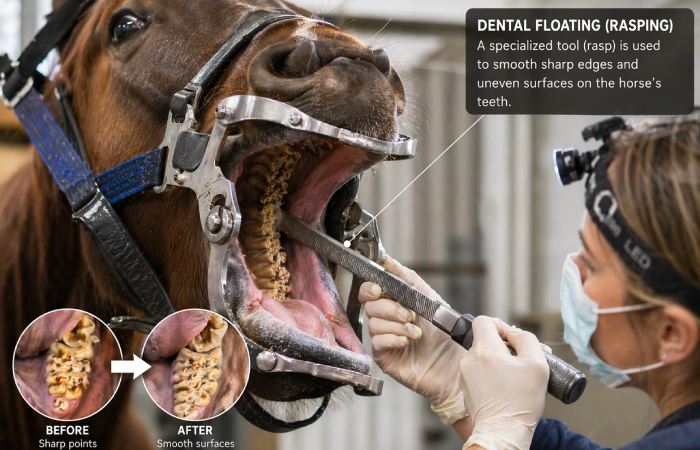
- Sedated oral examination: A full oral examination almost always requires mild sedation and a full-mouth speculum (a device that holds the mouth open safely). This allows examination of the entire arcade of cheek teeth — surfaces, angles, gaps, and soft tissue.
- Floating (rasping): Using hand rasps or motorized dental equipment, the practitioner removes sharp enamel points from the outer edges of upper cheek teeth and inner edges of lower cheek teeth. Reduces the height of hooks and ramps that develop at the front and back of the cheek teeth arcades.
- Treatment of specific pathology: Addressing wave mouth (uneven arcade height), steps (individual teeth significantly taller than neighbors), infundibular cavities (caries in the central cup of the cheek teeth), periodontal disease, or loose/fractured teeth.
- Incisor assessment and correction: Checking the angle and length of the incisor table — a steep or excessive incisor angle can physically prevent the correct lateral chewing motion of the cheek teeth, causing uneven wear throughout the arcade.
How Often Should a Horse’s Teeth Be Checked?
Recommended frequency varies by age and individual dental development:
- Foals and young horses (0–5 years): Every 6 months during the period of tooth eruption and deciduous (baby) tooth shedding. Young horses can develop sharp edges rapidly during this period, and problems with eruption can cause significant pain if not addressed early.
- Adult horses (5–15 years): At minimum annually — most equine dental professionals recommend every 6–12 months depending on the individual horse’s dental development and any existing pathology.
- Senior horses (15+ years): Every 6 months is strongly recommended. Senior horses are at increased risk of loose teeth, periodontal disease, tooth loss, and the complications that follow, including difficulty maintaining weight and colic from improperly chewed food.
What You Can Do as an Owner to Support Your Horse’s Dental Health
Between professional visits, there is a great deal that horse owners can do to support dental health — through diet, management, observation, and daily care habits.
1. Feed a Diet That Supports Natural Dental Wear
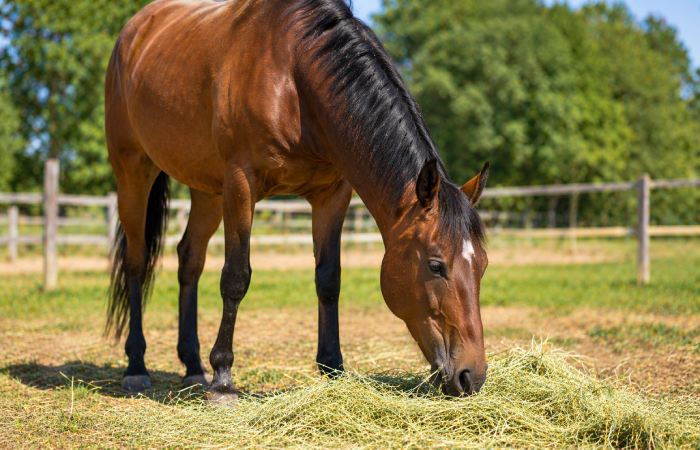
In the wild, horses spend 14–18 hours a day grazing — the continuous lateral grinding motion of consuming long-stemmed grass is what the equine dental system evolved for. Modern stable management often departs significantly from this pattern:
- Prioritize hay and pasture over concentrates: High-fibre forage requires the long lateral chewing strokes that naturally wear the teeth evenly. Processed feeds, pellets, and hard grains require less chewing and do not provide the same dental benefit. A forage-first diet is the most dental-friendly approach.
- Feed hay from the ground where possible: Feeding hay from ground level (rather than from a haynet or rack at head height) allows the horse’s head and jaw to adopt the natural grazing posture — which produces the most effective lateral chewing motion and most even dental wear.
- Avoid excessively hard treats or feeds: Very hard feeds can chip teeth, particularly in older horses with worn or compromised dental surfaces. Soaked or softened feeds are preferable for horses with known dental issues.
- Maintain forage availability for as many hours as possible: Continuous access to forage — through slow feeders, multiple haynets, or pasture access — mimics the natural grazing pattern that supports even dental wear and reduces the behavioral stress of food restriction.
2. Monitor Your Horse’s Weight and Body Condition Regularly
Weight loss is one of the earliest and most consistent signs of dental problems in horses. A horse that cannot chew effectively loses the ability to extract adequate nutrition from its feed — even if it appears to be eating normally. Weighing your horse monthly or assessing body condition score (BCS) on a weekly basis allows you to catch early weight loss that might otherwise be attributed to a poor doer or seasonal factors.
Look specifically for loss of muscle over the topline — the muscles along the back and hindquarters — as this is often the first visible sign of reduced nutritional uptake from inadequate chewing.
3. Check the Droppings Regularly
This is one of the simplest and most underused diagnostic tools available to horse owners. A healthy horse’s droppings should consist of well-chewed, broken-down fibre with no recognizable long stems. The presence of long fibre strands, whole grain kernels, or undigested feed in the droppings is a reliable indicator that the horse is not chewing effectively — which almost always points to a dental problem requiring professional attention.
Also watch for quidding — the dropping of partially chewed food balls from the side of the mouth — which is a classic sign of dental pain during chewing.
4. Observe Behavior Under Saddle and at the Bit
Dental pain is a leading cause of behavioral issues in ridden horses that are often misattributed to training problems, bit fit, or stubbornness. Signs that dental pain may be contributing to ridden problems include:
- Head tossing or tilting when contact is applied
- Resistance to accepting or maintaining the bit
- One-sided stiffness or reluctance to flex in one direction
- Hollowing the back or tension through the topline under saddle
- Bolting or sudden unexplained changes in behavior under saddle
- Reluctance to accept the bridle or putting ears back during bridling
Any new or unexplained behavioral issue in a ridden horse warrants a dental check before addressing it through training.
5. Provide Clean, Fresh Water at All Times
Adequate hydration is essential for digestive health in horses — and dental problems that make it painful to eat also affect how well a horse drinks. A horse with mouth pain may drink less, increasing the risk of impaction colic from poorly hydrated feed material in the gut. Ensuring fresh, clean water is always available and at a palatable temperature (not icy cold in winter) supports both dental and digestive health.
Warning Signs of Dental Problems in Horses
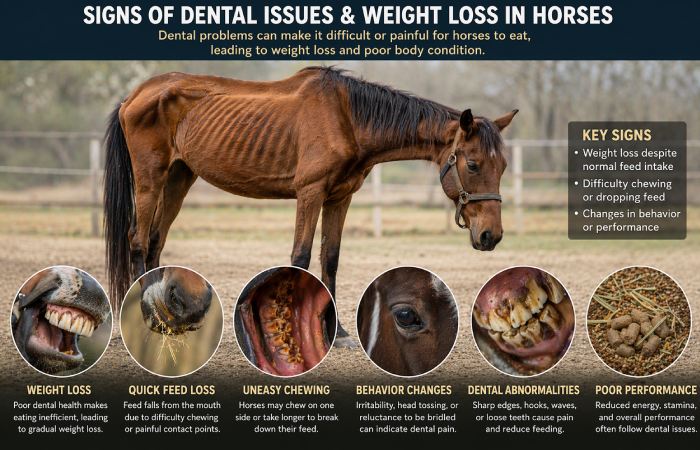
Horses are prey animals with a strong evolutionary drive to mask pain and vulnerability — a point consistently emphasized in equine health reporting from The Horse magazine. This means dental problems are frequently more advanced than initial signs suggest. Know what to look for:
- Quidding: Dropping partially chewed balls of food from the side of the mouth during eating. One of the most specific signs of dental pain during chewing.
- Slow or reluctant eating: Taking longer than usual to finish feeds, showing interest in food but then stepping away, or leaving feed that was previously eaten willingly.
- Weight loss: Particularly loss of topline muscle and body condition score despite adequate feed intake.
- Long fibre or whole grains in droppings: Undigested food in the droppings confirms inadequate chewing.
- Foul odour from the mouth or nostrils: Can indicate periodontal disease, a tooth root abscess, or food impacted in dental pockets.
- Facial swelling: Any hard or soft swelling along the jaw, cheek, or around the eye socket can indicate dental abscess or infection.
- Nasal discharge from one nostril only: Unilateral nasal discharge in horses is a classic sign of upper cheek tooth root infection affecting the sinuses, which sit directly above the roots of the upper cheek teeth.
- Bit resistance and ridden problems: As described above — any new behavioral change under saddle warrants a dental check.
- Head shaking or sensitivity around the mouth: Reluctance to have the face touched, head shaking, or flinching when pressure is applied around the jaw.
- Difficulty drinking: Flinching or avoiding cold water can indicate exposed dental nerves or tooth sensitivity.
Special Dental Considerations for Young and Senior Horses
Young Horses (0–5 Years)
Young horses undergo a dramatic period of dental change between birth and approximately 5 years of age, during which 24 deciduous (baby) teeth are shed and replaced by permanent adult teeth. This process does not always go smoothly:
- Retained caps (deciduous teeth that do not shed on schedule) can cause the underlying permanent tooth to erupt in an abnormal position — creating misalignment that will affect the horse’s dental function for life
- Eruption cysts can cause temporary facial swelling that usually resolves naturally but occasionally requires veterinary attention
- Wolf teeth typically emerge between 6–18 months and should be assessed — removal before bitting begins prevents pain and resistance under saddle
- The period between 2–4 years is particularly important to monitor, as this is when several permanent cheek teeth are erupting simultaneously
Senior Horses (15+ Years)
The senior horse’s dental system faces a different set of challenges — the finite reserve of tooth material is running low, and age-related pathology becomes increasingly common:
- Loose teeth: As the roots shorten with age and eruption continues, teeth may loosen. Loose teeth can be painful and create pockets that trap food, leading to periodontal disease. In some cases, extraction is necessary and ultimately beneficial.
- Tooth loss and the resulting gaps: When a tooth is lost or extracted, the opposing tooth (which now has no surface to wear against) will overgrow — eventually causing significant problems in the remaining arcade. Regular monitoring and management of these supererupting teeth is essential.
- Periodontal disease: Gum disease is common in senior horses. It causes pain, contributes to tooth loss, and can be a source of systemic infection. Regular professional cleaning and treatment of periodontal pockets is important.
- Difficulty maintaining weight: Senior horses with compromised dentition frequently struggle to extract adequate nutrition from long-stemmed hay. Switching to soaked hay, hay cubes, or senior feeds formulated for horses with dental limitations becomes necessary for many aged horses.
How to Choose the Right Equine Dental Professional
Equine dental care is performed by two types of professionals — equine veterinarians and equine dental technicians (EDTs) — and the regulatory frameworks governing their practice vary significantly by country. Understanding who is qualified to do what matters for your horse’s safety.
- Equine veterinarians: In most countries, only a licensed veterinarian can legally administer sedation, extract teeth, diagnose and treat dental pathology, and prescribe pain relief. A vet with equine dental training is the most qualified professional for any horse with complex dental needs, pain, or pathology.
- Equine Dental Technicians (EDTs): In countries including the UK, Australia, and parts of Europe, certified EDTs can perform routine floating and dental maintenance under specific regulatory frameworks — often with a requirement to work under veterinary supervision or with a referral system in place for cases requiring veterinary intervention.
- Red flags: Be cautious of individuals offering equine dental work without verifiable qualifications. Using poorly calibrated motorized equipment in untrained hands can cause severe dental trauma in seconds. Always ask for qualifications, professional registration numbers, and references.
- What to look for in a good equine dental professional: Uses full oral examination with a speculum routinely, recommends sedation for a thorough examination (rather than working on an unsedated horse by feel alone), keeps detailed records of each examination, communicates findings clearly with the owner, and refers to a vet when pathology is beyond their scope.
Frequently Asked Questions (FAQ)
Common questions about preserving horse teeth and equine dental care.
How often do horse’s teeth need to be floated?
Most adult horses require floating (rasping of sharp enamel points) at least once per year, and many benefit from every 6 months — particularly young horses during the period of active tooth eruption, horses with known dental problems, and senior horses with ongoing pathology. The correct interval for your horse specifically should be determined by your equine veterinarian or dental technician based on what they find at each examination.
Can horse dental problems cause colic?
Yes — dental problems are a recognized contributing factor to colic in horses. When a horse cannot chew properly, it swallows inadequately processed food. Large, poorly chewed food particles are more likely to cause impaction colic (blockage in the digestive tract), particularly in the large colon. Senior horses with compromised dentition are at highest risk. Ensuring good dental health is an important component of colic prevention in horses.
Do horses feel pain during dental floating?
When performed correctly with appropriate sedation, floating should be comfortable for the horse. Working on an unsedated horse rarely allows a thorough examination or treatment — and can cause significant stress and inadvertent trauma. A good equine dental professional will always recommend sedation for a full oral examination and treatment. Post-procedure, most horses show no signs of pain or discomfort and return to normal eating quickly.
What is quidding in horses?
Quidding is when a horse drops partially chewed balls of food — typically hay or grass — from the side of its mouth while eating. It happens when dental pain or sharp edges make thorough chewing difficult or uncomfortable. The horse attempts to chew, but pain causes it to release the food before swallowing. Quidding is one of the clearest visible signs that a horse has a dental problem requiring professional attention and should never be ignored.
How can I tell if my horse has a tooth abscess?
Signs of a tooth root abscess in horses include: swelling along the jaw or below the eye socket, discharge from one nostril only (upper cheek tooth roots sit directly below the sinuses), a foul smell from the mouth or nose, reluctance to eat, sensitivity when pressure is applied along the jaw, and in some cases a visible draining tract through the skin of the jaw. A tooth abscess is a veterinary emergency — contact your vet promptly if you observe these signs, as infection can spread rapidly.
What should I feed a horse with dental problems?
Horses with dental problems that impair chewing often need their forage presented in a more digestible form. Options include: soaked hay (reduces the need for chewing force), hay cubes or chaff soaked to a mash consistency, soaked sugar beet pulp (high fibre, easily digestible, excellent calories), senior complete feeds formulated for horses with dental limitations, and alfalfa-based feeds which are softer than typical grass hay. Always consult your vet or an equine nutritionist to ensure the diet meets your horse’s full nutritional requirements.
Final Thoughts: Dental Health Is Central to Every Horse’s Wellbeing
A horse’s teeth are not a peripheral concern — they are central to every aspect of its health, comfort, and performance. Problems that originate in the mouth affect nutrition, digestion, behavior, and quality of life in ways that are often not immediately obvious but accumulate significantly over time.
Preserving your horse’s teeth comes down to three commitments: regular professional dental examinations on an appropriate schedule, a forage-based diet that supports natural dental wear, and consistent owner observation that catches problems before they become serious. Together, these three things will serve your horse’s dental health across its entire lifespan.
Your horse cannot tell you when its teeth hurt. It can only show you — through weight loss, changes in behavior, or difficulty eating. Learning to read those signals, and acting on them promptly, is one of the most important things you can do as an owner.