
How to Turn a Spare Room Into a Home Gym Without Hurting Your Home’s Resale Value
Last Updated: October 26, 2026
Creating a home gym is an excellent way to make exercise more convenient without paying for a gym membership or commuting to a fitness center. An unused bedroom, bonus room, or underutilized space can become a practical workout area with relatively little renovation.
However, homeowners should consider more than fitness goals when planning the conversion. A poorly designed gym can damage flooring, make a room feel smaller, or reduce its appeal to future buyers. The good news is that you can create a functional workout space while preserving your property’s flexibility and resale potential.
Table of Contents
Choose the Right Room for Your Home Gym
The first step is finding a space that accommodates your exercise routine without sacrificing an important feature of your home.
A spare bedroom may be convenient, but converting one into a permanent gym can be a disadvantage if your property has only two or three bedrooms. Future buyers may prefer an additional bedroom, home office, or guest room over a dedicated fitness area.
Consider using a basement, bonus room, or underutilized area instead. These spaces can often accommodate exercise equipment without changing the home’s bedroom count.
Before making your decision, consider ceiling height, ventilation, natural light, electrical outlets, and available floor space. If you plan to use heavy weights, evaluate the floor’s load capacity, particularly on upper levels.
Protect Your Floors From Heavy Equipment
Flooring is one of the most important considerations when building a home gym. Treadmills, weight benches, dumbbells, and strength-training equipment can cause scratches, dents, and other damage.
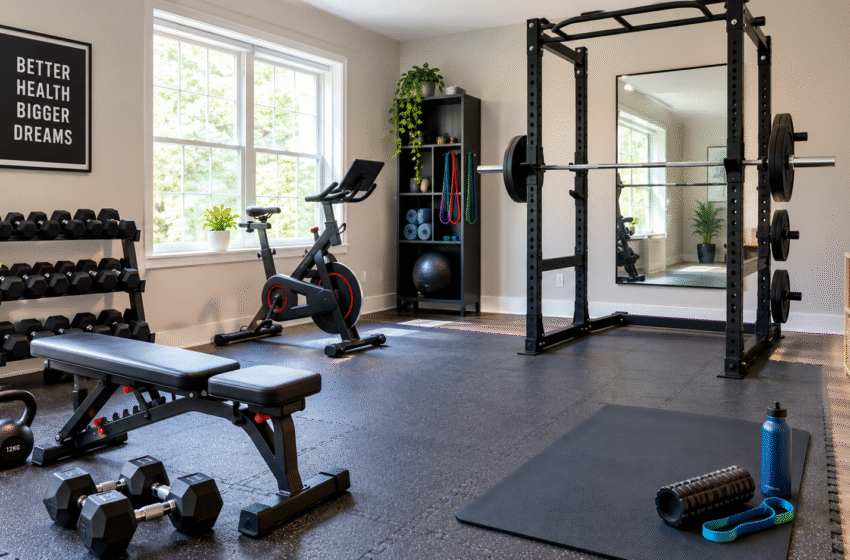
Rubber gym mats are a practical option because they provide cushioning and help protect the existing floor. Interlocking rubber tiles can also make it easier to create a workout area without undertaking a permanent renovation.
For exercises involving heavy weights, consider a purpose-built lifting platform and appropriate impact protection. Make sure the flooring is suitable for the equipment and the type of training you intend to do.
Avoid gluing specialized flooring directly to the existing surface unless you have considered the removal and repair costs. A removable setup gives future owners more choices and can simplify the process of preparing your home for sale.
Keep Your Home Gym Simple and Flexible
You do not need an expensive collection of machines to create an effective workout space. A few versatile pieces of equipment can support strength training, cardio, mobility exercises, and stretching.
For a compact home gym, consider:
- Adjustable dumbbells for strength training.
- Resistance bands for different exercises.
- A foldable exercise bench.
- A yoga or exercise mat.
- A compact treadmill or stationary bike, if space allows.
- Wall-mounted or freestanding storage for smaller equipment.
Avoid filling every corner with large machines. Leaving open floor space makes the room easier to use and helps it feel larger.
Robert Fausette, founder and CEO of Revival Homebuyer, emphasizes the importance of considering a home’s future marketability when planning improvements.
“A flexible room that can be converted back into a bedroom or office may appeal to a broader range of buyers than a space requiring extensive work to remove permanent gym fixtures.”
Keeping the room adaptable can help homeowners enjoy their gym without unnecessarily narrowing the pool of potential buyers. Before making major changes, consider which features are most valuable in your local real estate market.
Improve Ventilation, Lighting, and Comfort
A home gym should be comfortable enough to encourage regular use. Poor airflow, excessive humidity, and inadequate lighting can make workouts unpleasant and may contribute to odors or moisture problems.
If possible, choose a room with windows that can provide natural light and fresh air. Depending on the space, a ceiling fan, suitable exhaust fan, or other ventilation improvements may help maintain comfort.
Pay attention to lighting, too. Bright, even illumination makes it easier to exercise safely and use equipment correctly. Mirrors can help with checking exercise form, but they are optional and should not require permanent alterations if resale flexibility is a priority.
If you plan to install new electrical outlets, heating, or cooling equipment, check local building requirements and use qualified professionals where appropriate.
Choose Equipment That Fits Your Space and Goals
Selecting the right equipment is just as important as choosing the right room. Oversized machines can quickly make a spare room feel crowded, while poorly chosen equipment may end up unused.
David Dos Santos, CEO of Best Fitness, highlights the importance of planning a workout area around practical needs rather than simply filling it with equipment.
“Start with equipment that supports your fitness goals and fits comfortably within the available space. A well-planned home gym doesn’t need to be large or expensive to be effective.”
A practical approach is to identify the types of exercise you perform most often before buying anything. For example, resistance bands and adjustable dumbbells may be sufficient for basic strength training, while a stationary bike may be a better choice for someone who prioritizes cardio.
Measure the room and check the recommended operating clearance for each machine. Leave enough space to move safely between equipment, and choose storage solutions that keep weights and accessories organized.
A carefully selected collection of equipment can make the room more functional without compromising its appeal to future homeowners.
Avoid Renovations That Limit Future Buyers
A home gym can be appealing to fitness enthusiasts, but not every prospective buyer will want a dedicated exercise room.
The main risk is making changes that eliminate a useful bedroom or permanently alter the space. Removing a closet, changing the room’s layout, or installing extensive built-in equipment can make it harder to restore the room to its original purpose.
The same concern applies to garage conversions. A garage may offer plenty of room for exercise equipment, but removing parking or storage space can be a disadvantage in some markets.
Keep equipment removable, preserve existing features where practical, and avoid highly personalized finishes. Before starting major work, speak with a local real estate professional who understands buyer preferences in your neighborhood.
The impact on resale value depends on the property, the local market, and the nature of the changes. A home gym does not automatically increase a home’s appraised value, and homeowners should not assume that renovation costs will be recovered at sale.
Make Safety a Priority
A home gym must be safe as well as attractive. Keep walkways clear, secure equipment according to manufacturer instructions, and store weights where they cannot fall or create tripping hazards.
Heavy equipment should sit on a suitable surface, and larger machines must have adequate clearance for safe operation. If you plan to install wall-mounted racks or pull-up bars, make sure the mounting surface and installation method can support the intended loads.
Avoid placing heavy weights on an upper floor without considering the structure’s capacity. When in doubt, consult a qualified building professional before adding substantial loads.
You should also keep the room clean and dry. Regularly clean exercise mats and equipment, and address any signs of moisture promptly.
For general guidance on safe residential improvements, consult the U.S. Consumer Product Safety Commission for relevant home and equipment safety information.
Prepare the Room for Resale Before Listing
If you decide to sell your home, make it easy for prospective buyers to imagine different uses for the room.
Remove bulky equipment that makes the space feel cramped. Repair flooring damage, patch unnecessary mounting holes, and repaint walls if needed. Keep storage organized and ensure that windows, closets, and other useful features remain visible.
If the room was previously a bedroom, restoring its bedroom appearance may be worthwhile, particularly when bedroom count matters in your local market. You can still mention that the room is suitable for a home gym in the listing description.
For additional ideas about improving everyday living spaces, visit FindCult for its broader health, fitness, and wellness content.
Final Thoughts
Turning a spare room into a home gym can make it easier to exercise consistently and get more use from your home. However, the best approach is to create a space that serves your current needs without limiting its future uses.
Choose the right room, protect the floors, invest in versatile equipment, and maintain good ventilation. Most importantly, avoid permanent changes that sacrifice bedrooms or other features buyers may value.
A practical, well-maintained home gym can be a welcome lifestyle feature. By keeping the design flexible and renovation costs reasonable, you can enjoy the benefits of working out at home while helping preserve your property’s appeal when it is time to sell.