
Simple Ways to Create a More Beautiful and Personal Home
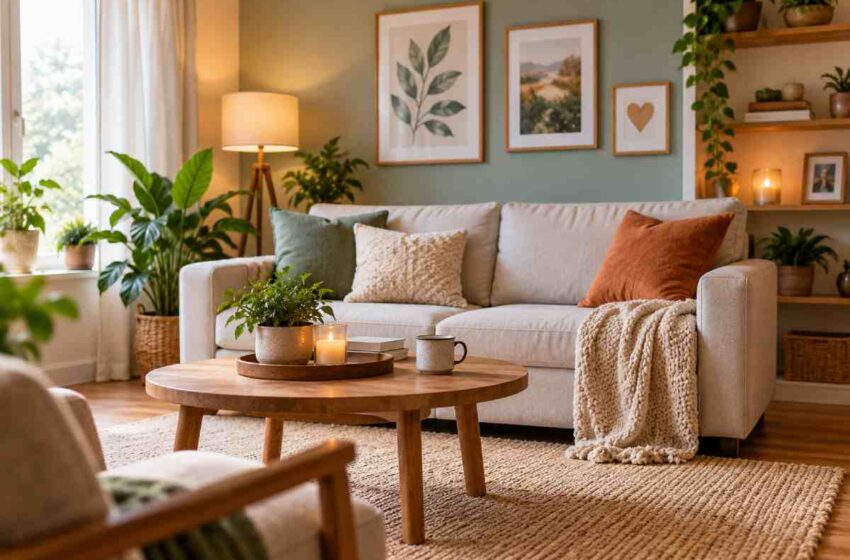
Transforming your living space into a beautiful and personal sanctuary doesn’t require a complete overhaul or a hefty budget. By focusing on a few strategic changes, you can create an inviting atmosphere that reflects your personality and style. Plus, there are always “World of Roses discount codes” to help you get started with some unique garden touches.
Table of Contents
Find Your Style
Before you buy a single cushion or repaint a wall, figure out what you actually like—not what you think you should like. Your home will feel more “you” when your choices come from preference, not trend panic.
Start with a quick self-audit:
- Look at what you already gravitate toward. Check your wardrobe, your saved posts, your favorite cafés/hotels, even your phone wallpaper. Patterns show up fast: clean lines, earthy tones, bold color, vintage pieces, lots of plants, whatever.
- Collect references (but keep it tight). Make a small mood folder: 10–20 images max. If it turns into 300 pins, it becomes noise. You’re trying to spot repeat themes—materials, colors, shapes, lighting.Tom Church, Co-Founder of LatestDeals.co.uk (the discount code platform), says: “When you’re making a decision—whether it’s decorating your home or buying something new—start by narrowing your options. A smaller, focused shortlist makes it easier to spot what you genuinely like and avoid impulse choices.”
- Name your non-negotiables. Examples: “Must feel calm,” “Needs to be kid-proof,” “I want it bright,” “I hate cluttered surfaces.” These rules keep you from buying pretty stuff that doesn’t work in real life.
Now, about mixing styles: yes, do it—just do it on purpose.
- Pick a “base” style (70%) and an accent style (30%). Maybe mostly modern with a little rustic, or mostly Scandinavian with a few vintage hits. This prevents the room from feeling like a showroom clearance aisle.
- Use a connector. Mixed styles look intentional when something ties them together: a consistent wood tone, repeated metal finish (black, brass, chrome), or a shared color palette.
- Repeat key shapes/colors. If you bring in one curved vintage mirror, echo curves elsewhere (a round lamp, arched frame). Repetition is what makes “eclectic” look curated instead of chaotic.
Finally, test-drive your style in small, reversible ways: a throw, a lamp, a piece of art, a rug. If it still feels right after a couple of weeks of normal living, you’ve found your direction.
Refresh Your Space with Color
Color is the fastest way to make a room feel new—without buying new furniture or doing a full redesign. A fresh coat of paint can completely shift the vibe: cleaner, warmer, calmer, brighter. And it doesn’t have to mean painting every wall like you’re on a renovation show.
Start small if you want. Paint one wall as an accent. Refresh tired trim in crisp white. Or repaint a door in a bold shade for a quick “something’s different” moment. Even swapping out a few big color surfaces—curtains, a rug, bedding—can do the job with less commitment than paint.
A simple way to choose colors is to treat it like mood-setting (aka color therapy):
- Soft blues and greens: calm, airy, “I can finally relax here.”
- Warm neutrals (sand, cream, greige): cozy, grounded, easy to live with.
- Terracotta, rust, muted mustard: warm and personal, without screaming for attention.
- Deep navy, charcoal, forest green: moody in a good way—great for bedrooms and snug spaces.
- Whites: clean and bright, but pick the right undertone (warm vs. cool) so it doesn’t feel harsh.
Keep one practical rule in mind: light colors open a space up; dark colors make it feel intentional and intimate. Neither is “better”—it’s about what you want the room to do.
If you’re unsure, test first. Grab sample pots, paint big swatches, and look at them morning and night. Lighting changes everything. Once you land on a palette that feels like you, the whole house starts to feel more cohesive—without you having to explain it to anyone.
Play with Textures
Paint changes a room fast. Texture makes it feel finished.
Start with textiles. They’re the easiest way to add warmth without committing to anything permanent. Toss a chunky knit throw over the arm of the sofa. Add two or three pillows in different fabrics—think linen, velvet, boucle, cotton—so everything doesn’t blend into one flat “matchy” look. If your floors are bare (or your rug is too thin), layer in a rug with some heft: jute for earthy and tough, wool for soft and cozy, a low-pile patterned rug for hiding real life.
Then bring in hard textures for contrast. A room full of soft stuff can feel a little sleepy, so balance it out with materials that catch light and add structure. Wood = warmth. Metal = edge. Glass = clean. Try a wooden tray on an ottoman, a metal floor lamp, or a glass vase that reflects light instead of absorbing it.
A simple rule: mix matte + shine, and mix smooth + rough. One fluffy element, one crisp element, one natural element. That’s usually enough to make a space feel intentional—like someone lives there on purpose.
Let There Be Light
Light is the fastest “before and after” you can do without moving a single piece of furniture. More light makes a room feel bigger, cleaner, and calmer. Less light (done right) makes it feel cozy and intentional. You want both.
Start with natural light.
- Swap heavy curtains for lighter options. Sheer panels, linen, or a simple roller blind lets daylight in while still giving privacy.
- Hang curtains higher and wider. Mount the rod closer to the ceiling and extend it past the window frame. When the curtains are open, you’re not blocking the glass.
- Clean the glass and clear the sill. Sounds basic, works every time. Plants and objects are great—just don’t build a wall on your windowsill.
- Use mirrors strategically. Put one opposite or adjacent to a window to bounce light deeper into the room. Instant brightness, zero rewiring.
Then layer your artificial lighting.
Overhead lighting alone can feel harsh and flat. Aim for three layers:
- Ambient: your main source (ceiling light or a bright floor lamp).
- Task: focused light where you do things (reading lamp, under-cabinet kitchen lights, desk lamp).
- Accent: mood and depth (wall sconces, picture lights, small lamps on shelves).
Add dimmers wherever you can.
A dimmer turns one light into ten different vibes. If hardwiring isn’t on the table, use:
- Smart bulbs (app-controlled brightness and warmth)
- Plug-in dimmers for lamps
Choose warmer bulbs for comfort.
If your home feels like an office, your bulbs are probably too cool.
- Living areas/bedrooms: 2700K–3000K (warm, flattering)
- Kitchen/bathroom task zones: 3000K–4000K (clearer, less sleepy)
Quick wins that look expensive:
- Replace one “meh” ceiling fixture with something simple but bold.
- Use matching lamp shades (or at least matching color temperature) so rooms feel cohesive.
- Put lamps on timers so the house feels welcoming before you even walk in.
Good lighting doesn’t scream for attention. It just makes everything else in your home look better.
Personalize with Art and Décor
A home gets “beautiful” when it looks intentional. It gets personal when it looks like you live there—specifically, you. Art and décor are the fastest way to make that happen, because they carry story without needing a full renovation.
Pick art that actually means something
Forget matching your sofa. Choose pieces that hit a nerve: a print from a city you love, a painting that reminds you of your childhood house, a concert poster from the night you still talk about. If it makes you feel something (even if that something is “this is weird but I like it”), it belongs.
A few easy, low-effort guidelines:
- Go big if you can. One larger piece often looks cleaner than five tiny ones scattered around.
- Repeat a color on purpose. If your artwork has one strong color, echo it with a cushion, vase, or book spine nearby. Instant cohesion.
- Don’t overthink “rules.” The only hard rule is: it shouldn’t feel like a hotel.
Make a mini gallery wall—without chaos
Gallery walls work when they’re curated, not crowded. Stick to one unifying element: consistent frame color, a shared theme (travel, family, nature), or a tight color palette.
Quick setup method:
- Lay everything out on the floor first.
- Take a photo, adjust spacing until it looks balanced.
- Hang starting from the center and work outward.
Pro tip: mix in one unexpected item—woven piece, small mirror, vintage plate. It breaks the “all-frames” look and feels more collected.
Use personal photos like design, not clutter
Personal photos can look elevated with tiny upgrades:
- Print them in black and white for an instant “art” vibe.
- Use matching frames (or all mismatched, but truly intentional).
- Choose fewer, better photos—the ones you’d save if your phone got wiped.
And don’t limit photos to hallways. A single framed photo on a bedside table can feel more intimate than a whole wall of them.
Display memorabilia like it’s curated
Souvenirs and keepsakes don’t need to live in a drawer—or explode across every surface. Treat them like a small collection:
- Put items on a tray (it instantly makes it look organized).
- Use shadow boxes for tickets, postcards, or small objects.
- Keep “special” items in one or two zones per room, so they read as deliberate.
Rotate, don’t accumulate
If you love décor, you don’t need to own less—you need to cycle it. Store a few pieces and swap them every couple months: a different print, a new object on the shelf, a changed vignette on the coffee table. Same room, fresh energy, no shopping spree required.
Bottom line: art and décor should tell the truth about you. If your space feels a little more “you” every time you add something, you’re doing it right.
Indoor Plants: A Breath of Fresh Air
Indoor plants are the easiest “before and after” upgrade you can buy—no renovation dust, no commitment issues (mostly). A little greenery softens a room, makes it feel lived-in, and adds that calm, natural vibe humans seem hardwired to like. Bonus: many houseplants can help improve the feel of indoor air and humidity, which is handy if your home leans dry or stuffy.
Tom Church, Co-Founder of LatestDeals.co.uk (which lists discount codes for retailers like worldofroses.com), says: “If you’re starting out with indoor plants, keep it simple—choose hardy varieties and spend your budget on a couple of good-looking pots. A few well-placed plants can make a room feel instantly more put-together.”
Start simple. If you’re new to plant life, pick forgiving options that won’t spiral into drama the moment you miss a watering day. Think pothos, snake plant, ZZ plant, spider plant, or a peace lily. They handle normal homes, normal light, and normal human neglect.
Now, make it look intentional:
- Mix sizes for instant depth. One tall plant (like a ficus or dracaena) anchors a corner. Medium plants fill shelves and side tables. Small plants finish a windowsill or desk.
- Vary the shapes. Pair spiky leaves (snake plant) with trailing vines (pothos) and something rounder or bushier (pilea, fern). Different silhouettes = more visual interest.
- Group in odd numbers. Three plants together often looks more “styled” than two. Use a tray or a cluster of pots to make it feel like one design choice, not random clutter.
- Use the right container. A basic plant in a good pot looks expensive. Ceramic, terracotta, woven baskets, or matte planters can match your style—modern, rustic, minimalist, whatever.
- Put plants where you’ll actually see them. If it makes you happier walking into the room, it’s doing its job. Windows are great, but bright indirect light works for loads of plants too.
A small reality check: plants don’t need constant attention, but they do need consistency. Water when the top inch of soil is dry (varies by plant), don’t let pots sit in water, and rotate them occasionally so they don’t lean like they’re trying to escape.
Bottom line: greenery makes a home feel more human. You don’t need a jungle. You just need a few well-placed plants that look like they belong there—because they do.
Declutter to Rejuvenate
Decluttering is the fastest “room makeover” you can do without buying a single thing. Less visual noise = more calm. And bonus: your favorite pieces finally get to shine instead of being buried under random stuff.
Start small so you actually finish:
- Pick one zone, not a whole room. A drawer, a shelf, the coffee table, the entryway. Win a battle, not the war.
- Use the quick-sort method:
Keep (use it / love it), Move (belongs elsewhere), Donate/Sell, Bin (broken, expired, pointless). - Be real about ‘someday.’ If it hasn’t been used in a year and you wouldn’t buy it again today, it’s probably not staying.
A few spartan rules that work:
- Clear surfaces are a feature. Aim to leave at least 30–50% of visible surfaces empty (counters, sideboards, tables). It makes a space look instantly cleaner and more intentional.
- One-in, one-out. New mug in? Old mug out. This stops clutter from creeping back.
- Duplicates are sneaky clutter. Three tape measures, five half-used notebooks, ten “backup” chargers. Keep the best one (maybe two) and let the rest go.
Then make staying tidy easy with storage that doesn’t look like storage:
- Baskets and lidded boxes for messy categories (remotes, cables, toys, dog stuff). If it’s ugly, hide it.
- Trays to “contain” daily essentials—keys, wallet, sunglasses—so they look curated, not scattered.
- Clear bins in cupboards for pantry/cleaning items so you can see what you have and stop buying doubles.
- A designated donation bag/box in a closet. When you find something you don’t want, put it straight in there—no debate, no pile.
Finally: leave a little breathing room. An uncluttered corner, an emptier shelf, a clear hallway. That negative space is what makes your home feel more open, more expensive, and more like a place you can actually relax in.
Seasonal Switch-Up
Swapping out a few pieces each season is the easiest way to make your home feel “new” without buying new furniture or redecorating your entire life. Think of it like changing playlists—same room, different mood.
Start with Small, High-Impact Changes
- Textiles
- Pillow covers
- Throw blankets
- A table runner
- Even a shower curtain
These are quick to change and instantly set the tone.
- Create an entryway moment
- A wreath
- A bowl for keys
- A simple vase
Whatever sits near your front door is prime seasonal real estate.
- Refresh the coffee table + shelves
Keep it easy:- One tray
- One candle
- One natural element (branch, pinecones, dried flowers)
Use the Season as a Color Guide (No Rules, Just Vibes)
- Spring
- Lighter linens
- Soft greens
- Fresh stems
- Summer
- Airy fabrics
- Bright accents
- Coastal textures like rattan or jute
- Autumn
- Warm neutrals
- Amber glass
- Chunky knits
- Winter
- Deeper tones
- Layered lighting
- Cozy materials like velvet or sherpa-style throws
Keep It Simple with a “Swap Box”
Store a small bin for each season (or one bin total) so you’re rotating, not accumulating.
- If something new comes in, something old goes out.
- That’s how it stays fun instead of cluttery.
Bonus Move: Switch Your Scent
A seasonal scent shift changes the whole room in a low-key way:
- Summer: citrus
- Fall: spice
● Winter: pine
DIY Projects: Make It Personal
DIY is the fastest way to make a home feel like yours, not like a showroom. It doesn’t need to be crafty-genius-level either. Small, imperfect, handmade touches usually look better than mass-produced décor because they carry a story.
Here are a few low-effort, high-impact ideas:
- Paint a simple canvas (or two). Grab a cheap pre-stretched canvas, pick 2–3 colors you already have in the room, and go abstract: wide brush strokes, blocks of color, or messy texture with a sponge. Hang it big, not precious.
- Make a centerpiece that isn’t trying too hard. A tray or shallow bowl + a candle + something natural (branches, stones, dried flowers) = done. Swap elements seasonally without starting over.
- Upgrade basics with paint or stain. That plain side table, dull picture frame, or tired plant pot? Sand lightly, paint it a solid color, and call it a custom piece. Matte finishes hide flaws and look expensive.
- Create a “memory wall” that looks intentional. Print a handful of personal photos in the same size (black-and-white works well), use matching frames, and keep spacing consistent. It’s personal, but still clean.
- DIY textiles without sewing. No machine needed: drape a throw at the end of the bed, or use iron-on hem tape to shorten curtains. Even changing pillow covers can feel like a mini-renovation.
A good rule: pick one weekend project that you can finish in a few hours. Finished beats ambitious. And every time you see it, you’ll feel that quiet little “I made this” satisfaction—which is basically the point.
Final Touches: Make It Cozy
Cozy isn’t cluttered. It’s comfort on purpose—the kind of room you actually want to land in at the end of the day.
Choose comfort-first furniture (that still looks good)
Start with the pieces you physically use the most.
- Sofa/chairs: Pick something you can sit in for an hour without shifting every two minutes. If you’re torn between “cute” and “comfy,” go comfy and style it up with throws/pillows.
- A soft landing: A rug underfoot instantly makes a space feel warmer—especially in living rooms and bedrooms. If the room echoes, the rug is doing more work than you think.
- Add one “relax anchor”: A reading chair, a window bench, a footstool—something that quietly says, this is where you exhale.
Rule of thumb: if it doesn’t support how you live (lounging, hosting, working, gaming, napping), it’s just taking up rent.
Build layers, not chaos
Cozy comes from layers you can adjust.
- Throw blanket within reach (not folded like a museum piece).
- Two pillow types: one for looks, one for actual comfort. Nobody wants to cuddle a decorative rock.
- Curtains that soften the room: even basic curtains can make a space feel finished, less “bare walls and vibes.”
Use scent like a finishing brushstroke
Scent is the fastest way to change a mood—without buying furniture.
- Candles: best for moments (evenings, guests, self-care).
- Diffusers: best for consistency (set-and-forget).
- Simmer pots: best for “my home feels alive” energy (citrus, cinnamon, rosemary).
Keep it simple: choose one scent family per area (clean/linen, woody, citrus, spicy). Mixing five different fragrances turns “cozy” into “confusing.”
Small comforts that punch above their weight
A few low-effort upgrades make a home feel cared for:
- A soft bedside lamp instead of blasting overhead light at night.
- A basket for throws so they look intentional even when they’re not.
- A tray on the coffee table to corral remotes, matches, and that one pen that’s always missing.
As Tom Church, Co-Founder of LatestDeals.co.uk (the discount code platform), puts it: “Cozy isn’t about buying more—it’s about making a few smart choices that you’ll actually use every day.”
Cozy isn’t a style. It’s a feeling you set up—then you live in it.