
How to Maintain Leg Comfort When Your Workday Involves Long Periods of Sitting
Last Updated: October 21, 2026
For many people, the workday begins at a desk and ends in almost the same position. Emails, meetings, deadlines, and computer-based tasks can keep us seated for hours, often without much thought about how little we have moved. By the end of the day, tired legs, stiff ankles, or a feeling of heaviness may become noticeable. These symptoms can seem like a normal part of office life, but they are worth paying attention to when they happen regularly.
Sitting is not inherently harmful. It allows people to concentrate, complete tasks, and rest between activities. The concern is spending long stretches in the same position without opportunities to stand, walk, or stretch. Over time, prolonged inactivity can contribute to physical discomfort and may be associated with broader health risks.
People in North Texas who experience persistent symptoms can learn about their options through find lasting relief from varicose veins in Frisco. Texas Vein Experts’ Frisco clinic evaluates varicose veins and chronic venous insufficiency, offering vein assessments and treatment planning based on individual findings.
Table of Contents
Why Sitting for Long Hours Can Affect Your Legs
The human body relies on movement to support several normal functions, including circulation. Blood travels from the heart through arteries and returns through veins. In the legs, veins must move blood upward against gravity, and one-way valves help prevent it from flowing backward.
The calf muscles assist this process whenever you walk or move your legs. Each contraction helps push blood through the veins toward the heart. When you remain seated for a long time, these muscles are less active, so this natural pumping action occurs less frequently.
As a result, some people may notice temporary swelling around their ankles or a feeling of heaviness after prolonged sitting. Staying in one position can also contribute to stiffness in the hips, knees, and ankles. These effects vary from person to person and may depend on activity levels, medical history, and other individual factors.
Occasional discomfort does not necessarily indicate a medical problem. However, if your legs regularly feel heavy, swollen, or painful after work, it is worth considering whether your routine needs adjusting and whether an underlying condition could be contributing.
Make Movement Breaks Part of Your Workday
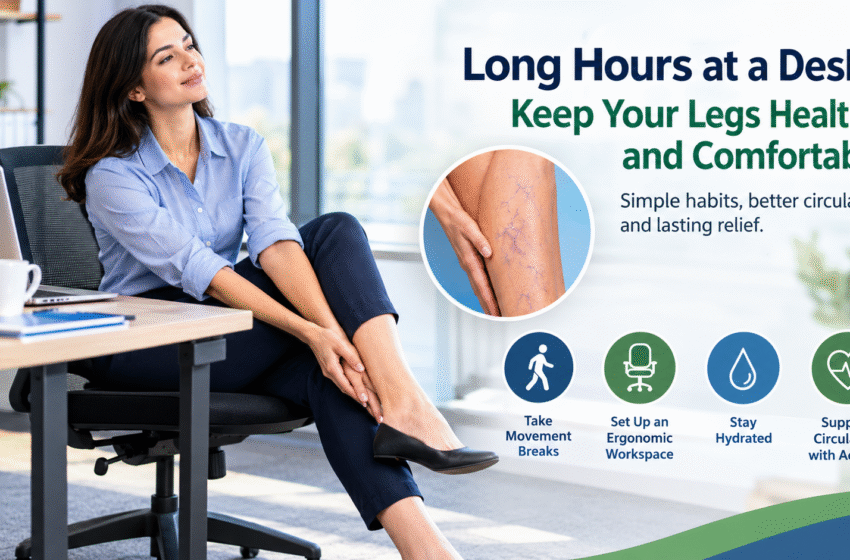
One of the simplest ways to make desk work more comfortable is to break up long periods of sitting. You do not need to wait until your lunch break or the end of the day to move. Short, regular movement breaks can fit naturally between everyday tasks.
For example, stand up after finishing a meeting, walk to refill your water bottle, or take a few minutes to move around after completing a demanding assignment. If you regularly take phone calls, consider standing or walking during calls when it is practical and safe.
Even when leaving your desk is difficult, gentle ankle movements can help keep your lower legs active. Slowly raising and lowering your heels, lifting your toes, and moving your ankles through a comfortable range of motion can activate the muscles in your lower legs while seated.
The aim is to reduce uninterrupted sitting rather than replace every seated task with standing. A balanced routine allows you to work comfortably while changing positions throughout the day.
Improve Your Desk Setup for Better Comfort
Your workstation can influence how comfortable your legs feel during long periods of computer work. Sitting with your feet unsupported or keeping your knees in an awkward position may add to discomfort, especially when the same posture continues for hours.
Start by adjusting your chair so your feet can rest comfortably on the floor or on a suitable footrest. Your knees should be positioned comfortably, and the chair should support your back without forcing you to lean forward. Avoid placing pressure on the backs of your thighs or sitting with your legs crossed for extended periods if doing so causes discomfort.
Desk ergonomics should support movement rather than encourage you to remain still. Even a well-designed chair cannot eliminate the need to change positions. Think of your workstation as one part of a healthy routine, alongside movement breaks and regular physical activity.
If your work involves several hours of video meetings, schedule short breaks between sessions whenever possible. Small adjustments to your calendar can make it easier to move without disrupting productivity.
Choose Activities That Support Circulation
Regular physical activity is an important part of general health and can help support leg function. Walking is a practical choice because it requires little equipment and can be fitted around many work schedules. A short walk before work, during lunch, or after finishing for the day can provide an opportunity to activate the calf muscles and reduce sedentary time.
Other activities, such as cycling, swimming, and suitable strength exercises, can also support overall fitness. The best choice depends on your preferences, physical abilities, and any existing medical conditions.
You do not need to complete a demanding workout every day to benefit from moving more. Consistency is often more realistic than an ambitious routine that is difficult to maintain. Taking the stairs when appropriate, walking during breaks, or spending some of your leisure time outdoors can all contribute to a more active lifestyle.
If exercise causes significant pain, unusual swelling, or other concerning symptoms, seek medical advice instead of pushing through discomfort. Activity can support general well-being, but persistent symptoms may have a cause that needs assessment.
Pay Attention to Hydration and Daily Habits
Work can become so absorbing that people forget to drink water, eat regular meals, or take breaks. Although hydration is not a treatment for vein disease, drinking fluids regularly supports normal body functions. Keeping a water bottle nearby can serve as a simple reminder to pause occasionally.
Balanced meals, adequate sleep, and regular physical activity also contribute to general well-being. If you spend most of the day at a desk, consider how your routine continues after work. Moving directly from an office chair to a sofa every evening can add to the total time spent inactive.
A short evening walk or gentle movement at home may help you transition away from work while adding activity to your day. If your ankles feel mildly swollen after sitting, changing position and elevating your legs for a short period may provide some relief, depending on the cause.
These measures can help support comfort, but they should not be treated as a cure for persistent swelling, varicose veins, or other medical conditions. If symptoms continue to return, it is important to understand why.
Recognize When Leg Discomfort May Be Linked to Vein Problems
Not all leg discomfort is caused by sitting, and not all circulation problems produce obvious symptoms. However, persistent heaviness, aching, itching, ankle swelling, or enlarged, twisted veins may be associated with varicose veins or chronic venous insufficiency.
Varicose veins develop when the walls or valves of certain veins weaken, allowing blood to flow backward and collect in the affected vessels. Symptoms may become more noticeable after long periods of standing or sitting, although patterns differ between individuals.
Other signs can include skin discolouration around the lower legs, changes in skin texture, or discomfort that interferes with normal activities. Some people have visible veins without pain, while others experience symptoms even when the changes are not particularly noticeable on the skin.
Age, family history, pregnancy, and prolonged periods of standing or sitting can influence vein health. Having a desk job does not mean you will develop varicose veins, but regularly experiencing leg symptoms is a good reason to pay attention.
A healthcare professional can assess your symptoms and determine whether a vein condition or another medical issue may be responsible. Depending on the findings, a duplex ultrasound may be used to evaluate blood flow and the function of the vein valves.
Sudden swelling in one leg, particularly when accompanied by pain, warmth, or redness, requires urgent medical assessment because it may indicate a blood clot. Sudden shortness of breath or chest pain requires emergency medical assistance.
When to Consider Professional Vein Care
If changes to your routine do not improve recurring leg discomfort, consider seeking medical advice rather than assuming the symptoms are simply part of working at a desk. A proper evaluation can help identify the cause and determine whether treatment is appropriate.
Depending on the diagnosis, care may involve lifestyle recommendations, compression therapy when appropriate, or minimally invasive procedures such as radiofrequency ablation or sclerotherapy. These options are not suitable for everyone, and treatment decisions should be based on a clinical assessment rather than appearance alone.
A specialist can explain the potential benefits, limitations, risks, and recovery expectations associated with each option. Seeking an evaluation does not automatically mean you need a procedure. It simply provides a clearer understanding of your symptoms and the available next steps.
Build a More Comfortable Work Routine
Maintaining leg comfort during a desk-based workday is largely about creating a routine that allows regular movement. Adjust your workstation, take short breaks, move your ankles when seated, and look for opportunities to walk throughout the day. These habits are usually easier to maintain when they become part of your schedule rather than something you remember only after discomfort begins.
It can also help to notice patterns. If swelling or heaviness repeatedly appears at a particular time of day, record when it happens and whether movement or rest changes the symptoms. This information may be useful if you need to discuss the problem with a healthcare professional.
Remember that movement breaks and healthy habits support general well-being, but they cannot correct every underlying vein problem. Persistent or worsening symptoms deserve attention, particularly when they interfere with walking, sleep, or daily activities.
Conclusion: Make Leg Comfort a Priority
Long hours at a desk do not have to mean accepting uncomfortable legs as part of working life. By breaking up sitting time, improving your workstation, staying physically active, and paying attention to recurring symptoms, you can take practical steps toward a more comfortable daily routine.
The most important habit is to recognize when ordinary tiredness becomes a persistent concern. While occasional stiffness may improve with movement and rest, ongoing swelling, heaviness, aching, or visible vein changes may need professional evaluation.
Start with manageable adjustments and build them into your workday. If symptoms continue despite those changes, seek medical guidance to understand the cause rather than relying only on home remedies.
A productive workday should not come at the expense of your well-being. Making movement part of your routine and taking persistent leg symptoms seriously can help you approach both work and health with greater awareness.