
How Modern Medical Technology Is Changing the Treatment of Varicose
How Modern Medical Technology Is Changing the Treatment of Varicose Veins
Published: November 23, 2026
Last Updated: November 23, 2026
Medical technology has transformed the way many health conditions are diagnosed and treated. One area that has experienced significant progress is vein care, particularly the treatment of varicose veins. Procedures that once required more invasive surgical approaches can now often be performed using minimally invasive techniques, offering patients additional treatment options and more comfortable recovery experiences.
Varicose veins are enlarged, twisted veins that commonly develop in the legs. They occur when the valves inside the veins become weak or damaged, allowing blood to flow backward and collect in the affected vessels. While some people are mainly concerned about their appearance, others experience aching, swelling, heaviness, and discomfort that can interfere with daily activities. Patients looking for professional care can explore trusted vein care for Phoenix patients to learn more about available vein treatment services and approaches to managing circulation-related concerns.
An individualized evaluation helps ensure that treatment decisions are based on medical needs rather than appearance alone.
Advances in diagnostic equipment, imaging technology, and treatment procedures have made it easier for medical professionals to identify vein problems and develop appropriate care plans. Understanding these developments can help patients make more informed decisions about managing their vein health.
This article is part of
General Health & Conditions
Table of Contents
Understanding the Causes of Varicose Veins
Veins carry blood from different parts of the body back toward the heart. In the legs, this process requires blood to move upward against gravity. Small valves inside the veins help maintain the correct direction of blood flow.
When these valves become weakened, blood can move backward and accumulate inside the veins. This increases pressure within the affected vessels, causing them to enlarge and become visible beneath the skin.
Several factors can contribute to the development of varicose veins. Age, genetics, pregnancy, excess body weight, and prolonged periods of sitting or standing can increase the likelihood of developing the condition.
Some people experience only visible changes, while others develop symptoms such as itching, leg cramps, swelling, and persistent aching. In more advanced cases, skin discoloration and venous ulcers may occur.
Modern medical approaches focus on identifying the underlying circulation problem rather than simply addressing the visible veins.
The Role of Advanced Diagnostic Technology
Accurate diagnosis is an important part of effective vein treatment. In the past, healthcare professionals often relied heavily on physical examinations and visible symptoms when evaluating varicose veins.
Today, imaging technology provides a more detailed understanding of how blood moves through the veins.
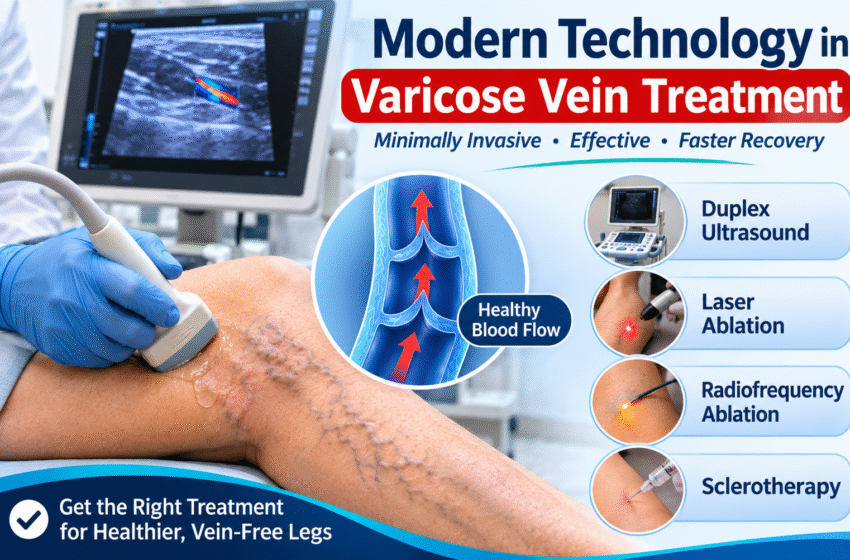
Duplex ultrasound is one of the most widely used diagnostic tools in modern vein care. It combines traditional ultrasound imaging with Doppler technology to examine blood flow inside the vessels.
This allows medical professionals to identify damaged valves, detect abnormal blood flow, and assess the condition of affected veins. It can also help determine whether deeper veins are involved.
The information gathered during an ultrasound examination helps specialists understand the underlying cause of symptoms and decide whether conservative care or a medical procedure may be appropriate.
Better diagnostic information also allows treatment plans to be more specific to each patient’s condition.
Endovenous Laser Treatment
Endovenous laser treatment, commonly known as EVLT or EVLA, is one of the important developments in modern varicose vein care.
This minimally invasive procedure uses laser energy to close an affected vein. A thin catheter is inserted into the targeted vessel, usually with ultrasound guidance. Laser energy is then delivered through the catheter, generating heat that causes the vein to close.
Once the problematic vein is sealed, blood is redirected through healthier veins in the surrounding area.
One advantage of this approach is that it generally avoids the need for large surgical incisions. Many patients can return home shortly after the procedure, although recovery recommendations depend on individual circumstances.
Medical professionals evaluate the patient’s vein structure and overall health before determining whether laser treatment is suitable.
Radiofrequency Ablation and Improved Treatment Precision
Radiofrequency ablation is another minimally invasive procedure used to treat certain varicose veins.
Similar to laser treatment, this technique involves inserting a thin catheter into the affected vein. Instead of laser energy, it uses controlled radiofrequency energy to heat the vein wall and cause the vessel to close.
The body gradually absorbs the treated vein, allowing blood to circulate through healthier vessels.
Radiofrequency technology provides controlled heating, which helps specialists treat targeted veins with precision. The procedure is commonly performed using local anesthesia, and many patients experience a relatively short recovery period.
The choice between radiofrequency ablation and laser treatment depends on several factors, including the patient’s vein anatomy, symptoms, and medical evaluation.
Sclerotherapy for Smaller Veins
Sclerotherapy has been used for many years to treat spider veins and certain smaller varicose veins.
During this procedure, a medical professional injects a special solution into the affected vessel. The solution irritates the vein lining, causing the vessel to close gradually. Over time, the treated vein becomes less visible as the body absorbs it.
Modern techniques and improved imaging support more accurate treatment planning. In some cases, ultrasound-guided foam sclerotherapy is used to treat veins that are not easily visible on the skin’s surface.
The number of sessions required depends on the size, location, and number of veins being treated.
Although sclerotherapy can be effective for selected patients, it is not suitable for every type of vein problem. A professional assessment helps determine the most appropriate approach.
How Modern Imaging Supports Better Treatment Planning
Medical imaging does more than identify damaged veins. It also helps specialists plan procedures with greater accuracy.
Ultrasound guidance allows medical professionals to observe the affected vessels during certain treatments. This helps them locate the targeted vein, monitor catheter placement, and assess the treatment area.
Improved imaging can also help identify circulation problems that may not be obvious during a physical examination.
By understanding the structure of the venous system, specialists can avoid relying on a one-size-fits-all approach. Treatment can instead be based on the location and severity of the underlying problem.
This is particularly important because two patients with similar-looking varicose veins may have different causes and treatment requirements.
The Benefits of Minimally Invasive Procedures
One of the biggest changes in modern vein care is the growing availability of minimally invasive procedures.
Traditional vein surgery sometimes involved removing or tying off affected veins through surgical incisions. Although these procedures remain relevant in selected situations, many patients can now be treated using less invasive alternatives.
Procedures such as endovenous laser treatment and radiofrequency ablation generally require smaller entry points and are often performed without general anesthesia.
Depending on the procedure and individual circumstances, patients may experience less postoperative discomfort, fewer wound-related concerns, and a quicker return to normal activities compared with traditional surgery.
However, minimally invasive does not mean risk-free. Possible side effects can include bruising, tenderness, temporary skin changes, and other procedure-specific complications.
A qualified specialist should explain the expected benefits, risks, and recovery requirements before treatment begins.
Personalized Vein Care and Patient-Centered Treatment
Modern healthcare increasingly recognizes that treatment should reflect each patient’s individual needs.
Factors such as age, medical history, lifestyle, symptom severity, and vein anatomy can influence the most appropriate treatment approach.
For example, someone with mild symptoms may benefit from compression therapy, regular movement, and lifestyle adjustments. Another individual with significant venous reflux may require a minimally invasive procedure.
Specialists also consider the patient’s expectations and daily routine when discussing treatment options.
Recovery and Long-Term Vein Health
Advances in treatment technology have improved the experience for many patients, but recovery remains an important part of the process.
After a procedure, patients may receive instructions about walking, compression stockings, physical activity, and follow-up appointments. Following these recommendations can support recovery and help specialists monitor treatment results.
Regular movement is particularly important for maintaining healthy circulation. Walking activates the calf muscles, which help push blood upward through the veins.
Maintaining a healthy weight, avoiding prolonged periods of inactivity, and elevating the legs when resting may also help manage certain symptoms.
It is important to understand that treating an affected vein does not necessarily prevent new varicose veins from developing. Some individuals may require additional monitoring or treatment in the future.
Follow-up examinations allow medical professionals to evaluate circulation and address any recurring concerns.
The Future of Varicose Vein Treatment
Medical technology continues to develop, creating opportunities for more accurate diagnosis and improved treatment experiences.
Advancements in ultrasound imaging, catheter design, laser equipment, and procedural techniques are helping specialists manage vein conditions with greater precision.
Research into vascular health is also improving the understanding of how circulation problems develop and how they can be managed over time.
As these technologies become more widely available, patients may have access to an expanding range of treatment options suited to different vein conditions.
However, technology alone does not determine treatment success. Clinical experience, accurate diagnosis, and proper patient evaluation remain essential parts of quality vein care.
Conclusion
Modern medical technology has significantly changed the treatment of varicose veins. Advanced ultrasound imaging, laser procedures, radiofrequency ablation, and sclerotherapy have expanded the options available to patients while reducing the need for more invasive approaches in many cases.
These developments allow medical professionals to identify underlying circulation problems, select suitable treatments, and create personalized care plans.
For people experiencing persistent leg discomfort, swelling, or visible varicose veins, seeking professional evaluation is an important first step. With the right combination of medical expertise, modern technology, and ongoing care, many patients can manage their symptoms and maintain a more comfortable, active lifestyle.